 Get your Free Findings
Common Credit Report Errors and How to Spot Them

Calvin Harvey II
October 15, 2026
The bottom line: The most common credit report errors fall into three groups: wrong identity info (including mixed files and accounts opened through identity theft), wrong account status (like false late marks, duplicate debts, or closed accounts shown as open), and wrong numbers (like balances and credit limits). Get all three of your bureau reports and check them section by section against your own records.
I've spent more than 10 years in the credit industry. The thing I've seen over and over is simple: most people never really read their credit report. They look at a score, maybe glance at the totals, and move on.
That's a problem, because your credit report isn't just a number. It's a detailed record that lenders, landlords, insurers, and sometimes employers use to make decisions about you. The FTC puts it plainly: what's in your report can affect whether you can borrow money and how much you'll pay to borrow it (FTC).
And mistakes happen more than you might think. In a 2013 study Congress asked for, the FTC found that one in five consumers had an error on at least one of their three credit reports (FTC, 2013).
So let's walk through the most common credit report errors, the ones I'd check first, and how you can spot them yourself.
Where Can I Get My Credit Reports for Free?
You can get free credit reports from all three nationwide credit bureaus (Equifax, Experian, and TransUnion) at AnnualCreditReport.com. According to the FTC, the three bureaus have permanently extended a program that lets you check your report from each one once a week for free (FTC). Checking your own credit reports doesn't hurt your credit.
Get all three. Each bureau keeps its own file, so an error might show up on one report and not the others.
What Are the Most Common Credit Report Errors?
The Consumer Financial Protection Bureau (CFPB) sorts common errors into three groups (CFPB). I like this list because it gives you a clear way to check your report, one section at a time.
1. Identity Errors
Identity errors are mistakes about who you are on your credit report. They're easy to skip past, but they matter.
- Wrong personal information. A misspelled name, an old or wrong address, or a phone number that isn't yours.
- A mixed file. This is when someone else's information ends up in your file, often because the two of you have the same or a similar name. The CFPB calls this a "mixed file."
- Accounts opened through identity theft. Accounts someone else opened in your name without your permission.
How to spot them: Start at the top of each report. Read your name, addresses, and other personal details out loud. Then scan the accounts list for anything you don't recognize at all, like a card you never opened or a loan you never took out.
If you think an account came from identity theft, go to IdentityTheft.gov. It's the federal government's site for reporting identity theft and getting a recovery plan. (Coming soon: our full guide on what to do when there's an account on your credit report that isn't yours.)
2. Incorrect Reporting of Account Status
Account status errors show up on accounts that are yours, but the details are wrong. In my experience, this is where people need to slow down the most.
The CFPB lists these as common examples (CFPB):
- Closed accounts reported as open.
- You're listed as the owner when you're only an authorized user. If someone added you to their card, you're not the one legally responsible for it.
- Accounts wrongly reported as late or delinquent. For example, a payment you made on time is marked 30 days late.
- Wrong dates. The date of last payment, the date the account was opened, or the date of first delinquency is incorrect.
- The same debt listed more than once, sometimes under different company names.
Duplicate debts come up a lot when a debt is sold or sent to a collection agency. The CFPB says a debt listed multiple times "is not a harmless error," because it could lower your credit score and lead to worse loan offers (CFPB). (Coming soon: our deep dive on duplicate accounts on your credit report.)
How to spot them: Go through each account one by one. Compare the status, payment history, and dates against your own records, like bank statements, payment confirmations, or account closing letters. Pay close attention to any "late" marks and any collection accounts.
3. Data Management Errors
Data management errors are wrong numbers on an account.
- Wrong current balance. For example, a balance that doesn't show a payment you already made.
- Wrong credit limit. A limit that's lower than your real one can make it look like you're using more of your available credit than you are.
How to spot them: Check the balance and limit for each account against your latest statement. If a number is still wrong after your next statement, take a closer look.
How Do I Check My Credit Report for Errors?
This is the checklist I use for every section of a credit report:
- Personal info: Is your name spelled right? Are all the addresses yours?
- Accounts you don't recognize: Is every account actually yours?
- Ownership: Are you listed correctly as an owner or as an authorized user?
- Open vs. closed: Do closed accounts show as closed?
- Payment history: Are any late marks wrong?
- Dates: Are the opened, last-payment, and first-delinquency dates correct?
- Duplicates: Does any debt show up more than once?
- Balances and limits: Do they match your statements?
- All three bureaus: Did you check Equifax, Experian, and TransUnion?
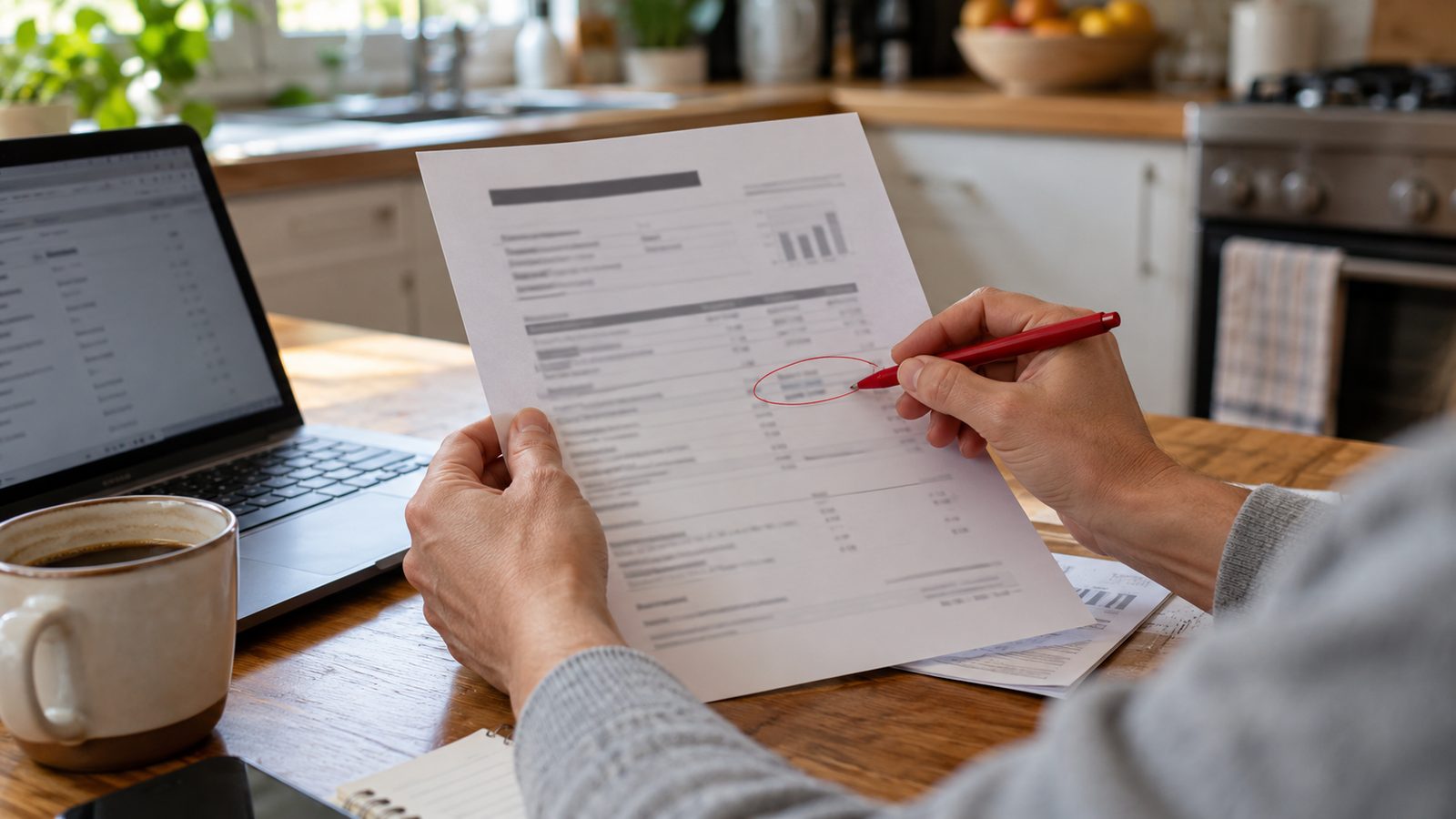
Circle or highlight anything that looks off, and gather any documents that back you up.
What Should I Do If I Find an Error on My Credit Report?
You have the right to dispute information that's inaccurate or incomplete. Under the Fair Credit Reporting Act, when you dispute an item, the credit bureau generally has to do a reasonable investigation within 30 days of getting your dispute (15 U.S.C. § 1681i).
Both the FTC and the CFPB say to dispute with the credit bureau that shows the error and with the company that reported the information, which is called the "furnisher" (FTC; CFPB). A good dispute clearly explains what's wrong and why, and includes copies (never originals) of documents that support it. Keep copies of everything you send.
One honest note: disputes are for information that's wrong or incomplete. If a negative item is accurate, a credit bureau can generally keep reporting it for seven years, or 10 years for bankruptcy (FTC). No one can promise a specific result from a dispute, and you should be careful with anyone who does.
Identity error vs. identity theft: what to do first
| If you see... | What to do first |
|---|---|
| An identity error (misspelled name, wrong address, a mixed file) | Dispute it with the credit bureau that shows it, and with the furnisher if an account is involved. |
| An account you never opened (possible identity theft) | Go to IdentityTheft.gov to report it and get a recovery plan. Then dispute the account with each credit bureau that shows it. |
(Coming soon: our step-by-step guide on how to dispute credit report errors, and what to expect while you wait.)
How Does Dispute Nerds Help?
Reading three full credit reports line by line takes time. Honestly, that's why I built the Dispute Nerds app myself.
Dispute Nerds is AI-powered credit dispute software. The AI goes through your credit report and flags items that may be errors, organized so they're easy to understand. Then you stay in charge: you review the findings, decide what to dispute, and sign and send your own disputes. Dispute Nerds never files disputes for you.
Findings are free. Your credit report comes from our monitoring partner and is billed separately.
FAQ
What is the most common error on a credit report?
The CFPB groups common errors into three types: identity errors (like wrong personal info or a mixed file), incorrect account status (like wrong late payments or duplicate debts), and data management errors (like a wrong balance or credit limit). Which one shows up most can depend on the person, so it's worth checking for all three.
Does checking my own credit report hurt my credit?
No. Checking your own credit report doesn't affect your credit. You can get free reports from all three bureaus every week at AnnualCreditReport.com.
How long does a credit bureau have to investigate a dispute?
Under the FCRA, a credit bureau generally has 30 days after it gets your dispute to investigate. In some cases, like when you send more information during the investigation, it can take up to 45 days (CFPB; 15 U.S.C. § 1681i).
What is a mixed credit file?
A mixed file is when someone else's information ends up in your credit file, often because you have the same or a similar name. The CFPB lists it as a common identity error (CFPB).
What is a furnisher?
A furnisher is the company that sends your account information to the credit bureaus, like a lender, card issuer, or collection agency. The FTC and CFPB say to dispute errors with both the bureau and the furnisher (FTC; CFPB).
Is Dispute Nerds software or a service?
Dispute Nerds is AI-powered credit dispute software, not a credit repair company. The AI reviews your report and points out possible errors. You review the findings, then sign and send your own disputes.
Sources
- Federal Trade Commission, "Disputing Errors on Your Credit Reports": https://consumer.ftc.gov/articles/disputing-errors-your-credit-reports
- Federal Trade Commission, "In FTC Study, Five Percent of Consumers Had Errors on Their Credit Reports That Could Result in Less Favorable Terms for Loans" (Feb. 11, 2013): https://www.ftc.gov/news-events/news/press-releases/2013/02/ftc-study-five-percent-consumers-had-errors-their-credit-reports-could-result-less-favorable-terms
- Consumer Financial Protection Bureau, "What are common credit report errors that I should look for on my credit report?": https://www.consumerfinance.gov/ask-cfpb/what-are-common-credit-report-errors-that-i-should-look-for-on-my-credit-report-en-313/
- Consumer Financial Protection Bureau, "How do I remove debts that are listed multiple times from my credit report?": https://www.consumerfinance.gov/ask-cfpb/how-do-i-remove-debts-that-are-listed-multiple-times-from-my-credit-report-en-1357/
- Consumer Financial Protection Bureau, "How do I dispute an error on my credit report?": https://www.consumerfinance.gov/ask-cfpb/how-do-i-dispute-an-error-on-my-credit-report-en-314/
- Consumer Financial Protection Bureau, "How long does it take to repair an error on a credit report?": https://www.consumerfinance.gov/ask-cfpb/how-long-does-it-take-to-repair-an-error-on-a-credit-report-en-1339/
- Fair Credit Reporting Act, 15 U.S.C. § 1681i (Legal Information Institute, Cornell Law School): https://www.law.cornell.edu/uscode/text/15/1681i
- AnnualCreditReport.com: https://www.annualcreditreport.com/index.action
- IdentityTheft.gov: https://www.identitytheft.gov/
Last updated: October 15, 2026